How a New Dad Problem Became My First iOS App
From a paper baby tracker to Figma, Claude, and my first native iOS app.

This year I turned 40. It feels like my old young version is finished and a new, slightly more mature era has begun. :D
But my life didn’t change just because I turned 40. I bought a house, and more importantly, a little baby girl came into our lives. And I think that second one will change our lives forever. Hopefully in a good way. :D
Suddenly all my routines changed. New routines were added. And somehow, every new routine came with a new small problem that my mind immediately wanted to find a solution for.
A new life, and a new problem
One of those problems was tracking.
During the first month, we needed to track our baby’s feeding, diapers and sleep in quite a lot of detail. Every doctor visit came with similar questions:
How many wet diapers today?
How much did she feed?
How often is she feeding?
How is she sleeping?
So somehow, we had to track all of this.
Our baby, Serin, lost a little more weight than expected after birth, so tracking quickly became one of the main topics in our house.
My first solution was, of course, to design something. :D
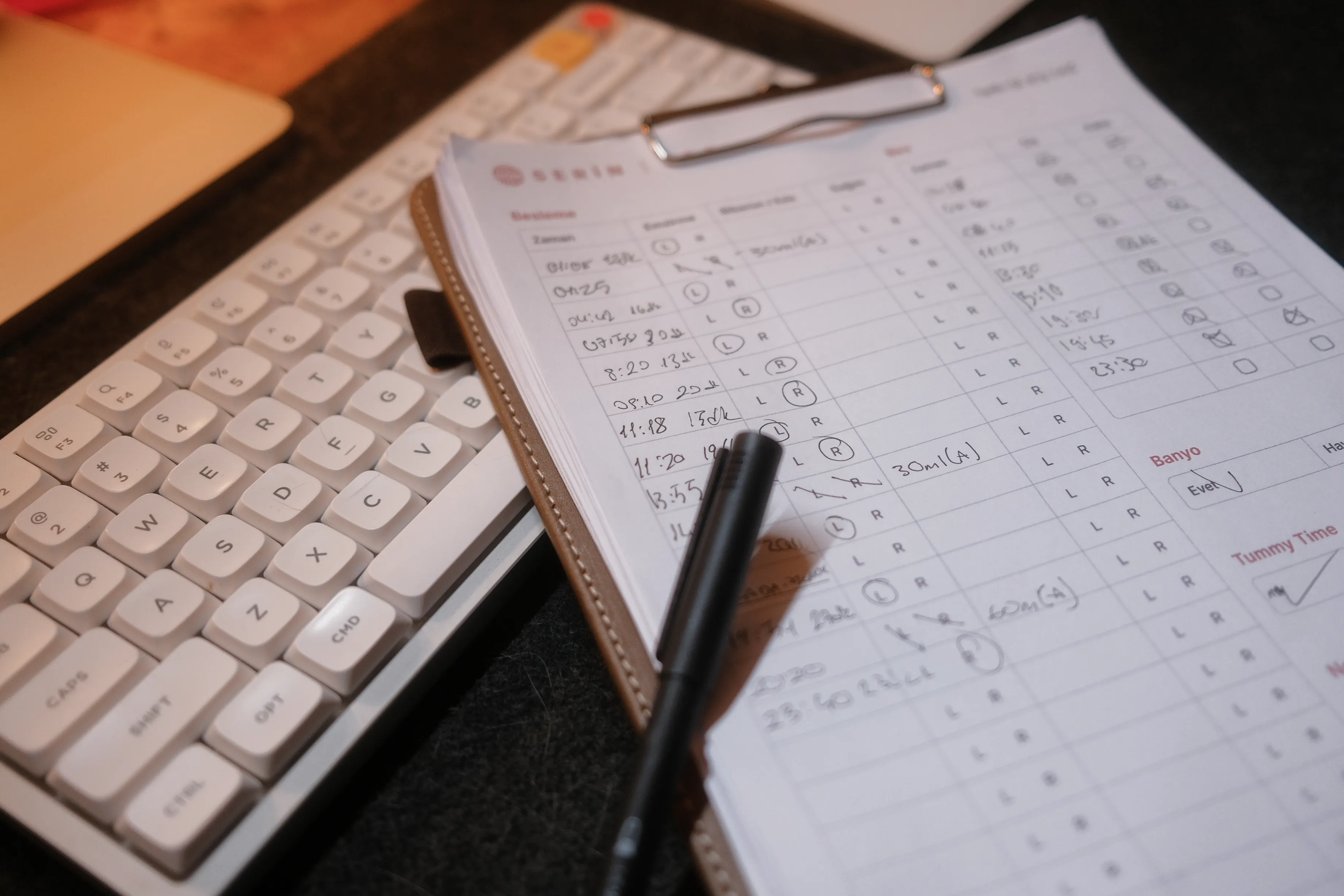
I designed some simple log pages where we could manually track feeding, sleep and diapers. Then I added bath time, tummy time and some notes.
I looked through Pinterest, explored what other parents were tracking, and used those ideas to design a personalized baby log for Serin.
It was good.
But it was still manual work.
Especially at night, in a dark room, half asleep, trying to remember what time the feeding started and then finding a pen and writing it down…
Not great.
It had to be digital.
A very simple phone app would be perfect.
Normally, at this point, I would probably search the App Store and find something that was good enough.
But now we have a new superpower: vibe coding.
Why not just build it?
So instead of looking for an app, I thought:
Why not design exactly what I want and try to build it myself?
I started in Figma.
Basic forms, functionality, feature set. I wanted it to be as simple as possible, but still good enough to track the critical data we needed for our baby.
Show the messy version here, not the polished final design. A few early screens/concepts side by side would work really well because the reader can see where the app started.
After several concepts, I found some inspiration from Nothing’s dot-based visual language and typography. I wanted to use that feeling somehow — inspired by Nothing, but with its own identity.
Before coding, obviously I needed a brand :D
Then came something that, if you know me, you probably already expect.
Before coding anything, I needed a brand. :D
So first: a name.
After a very long conversation with AI and probably way too many naming options, I ended up with Kubai.
Kubai is a name inspired by Turkic mythology. Kubai is a protective figure associated with mothers, childbirth, and young children — watching over them during the earliest and most vulnerable stages of life.
The moment I read that, I thought: this is it.
The meaning was almost too perfect for the app.
It also gives the project a small connection to my own culture, which I really like.
Although I have absolutely no idea how Kubai sounds to non-Turkish people. If you’re not Turkish, I genuinely want to hear your first impression. :D
After the name came a lot of logo concepts, and eventually I found the dotted visual direction I was looking for.
Dots, simple shapes, Google’s dotted font together with Geist Mono… everything started to feel like the same product.
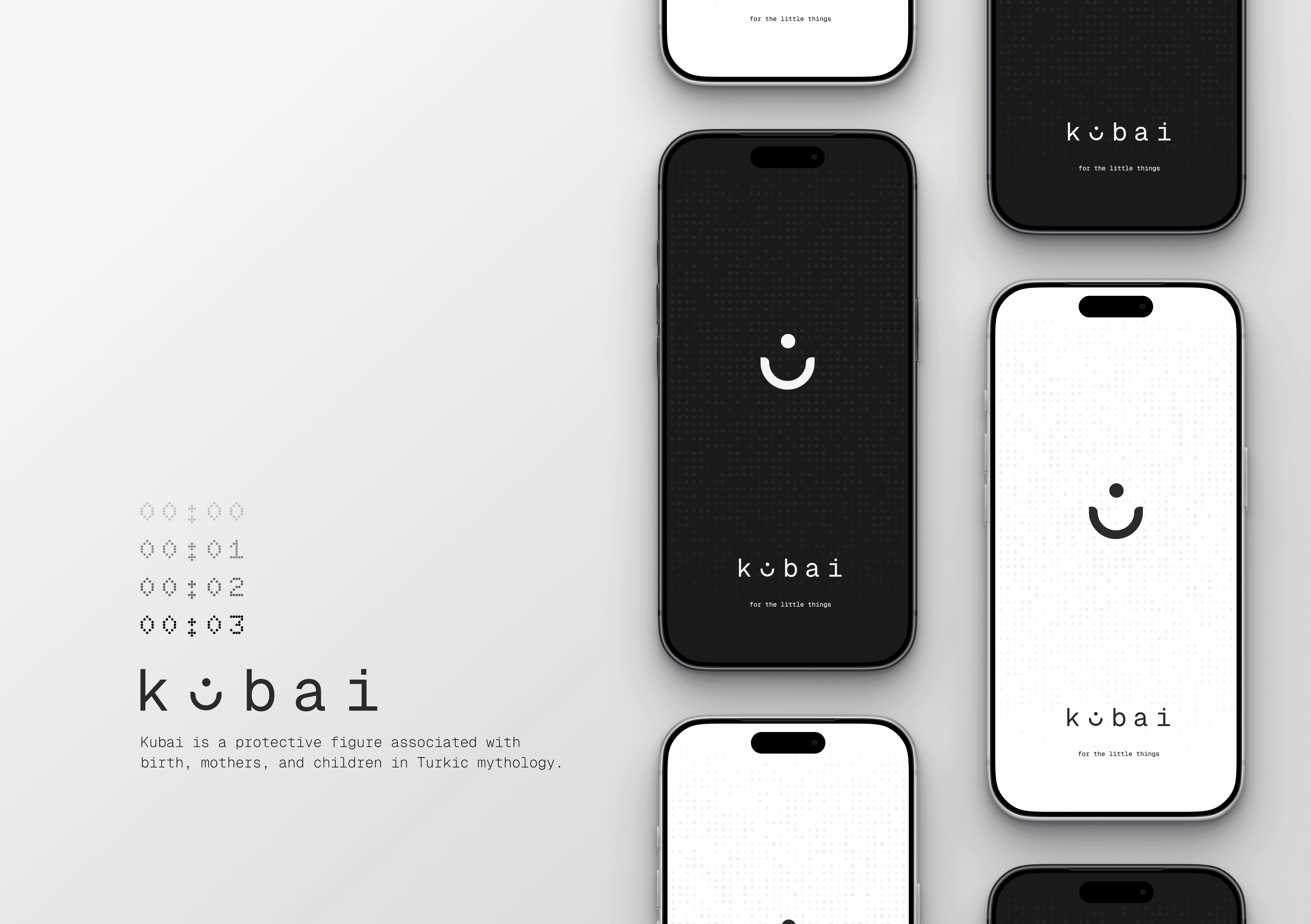
And again, if you know me, I couldn’t just make a few screens and start coding.
I made the components, color tokens, typography and auto layouts, and started putting the whole experience together in Figma.
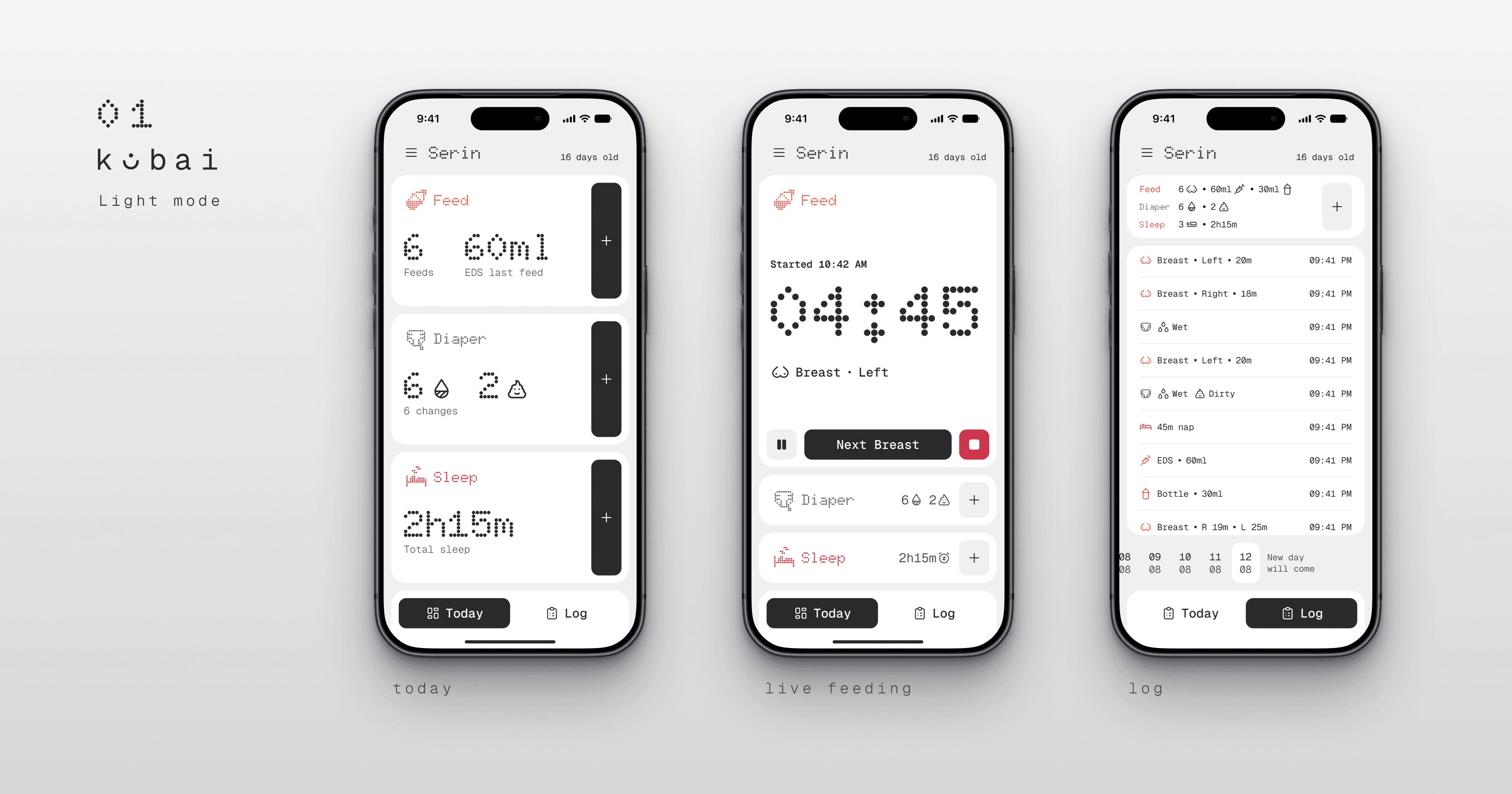
At first, I designed everything in light mode.
But then I remembered where we would actually be using this app a lot: in the middle of the night, in a dark room, usually with a sleeping or half-sleeping baby next to us.
Opening a bright white screen at 3 AM didn’t sound like a great idea. :D
So dark mode quickly became less of a “nice to have” and more of an obvious part of the product.
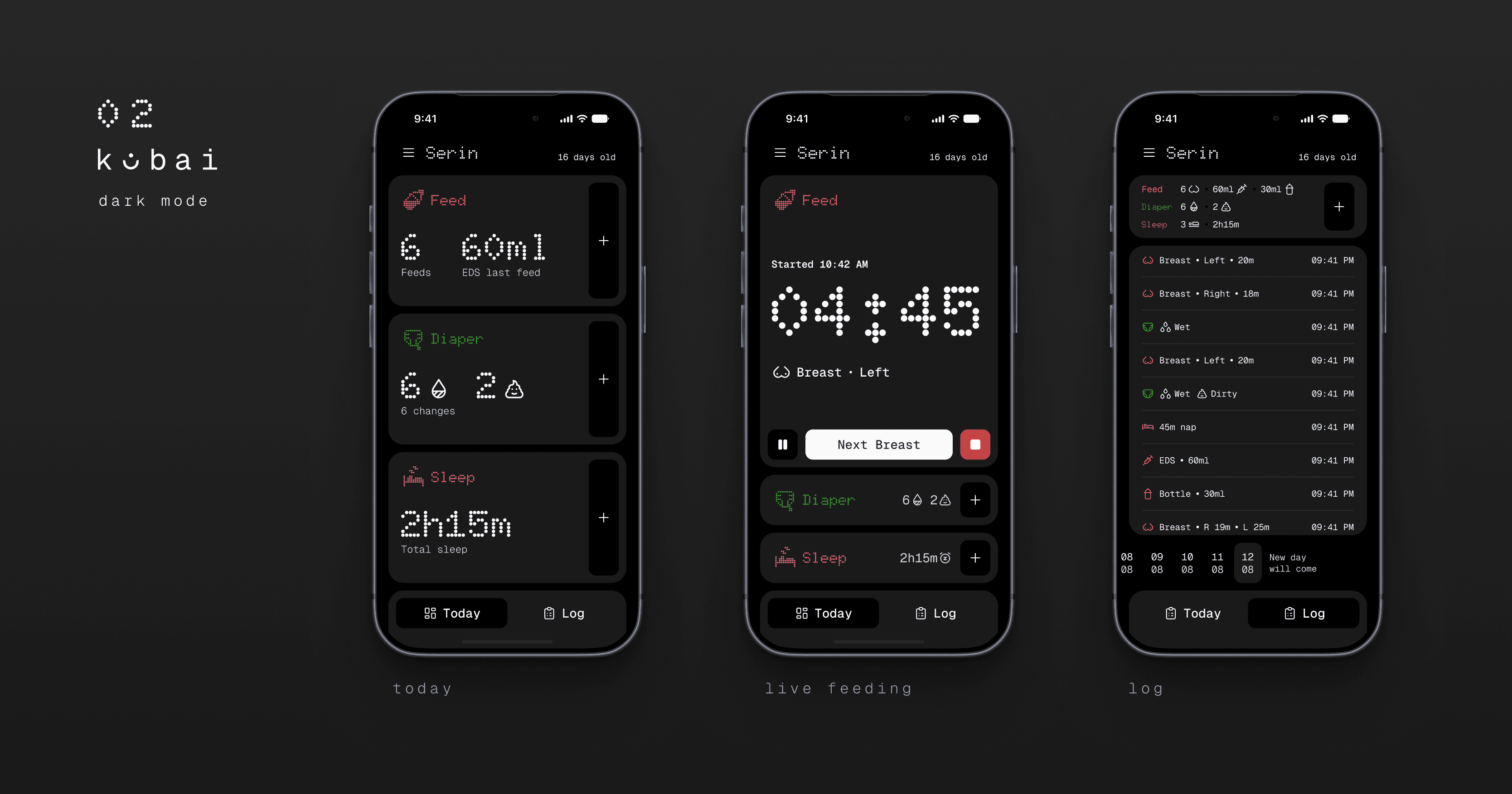
Of course, I couldn’t just make the background black and call it a day. I set up the colors and components properly so the whole interface could work consistently across both themes.
Basically, I used almost every Figma feature available for UI design. :D
Now everything was set up.
Time to see if I could actually build it
Time to talk to Claude.
I explained the idea and asked Claude to create a plan for building it as a native iOS app. This is actually the first time I’m building an iOS app, so there has already been A LOT of learning. But that is probably another blog post.
Claude, like always, generated a beautiful plan, structure and architecture for me.
Do I actually know if the architecture is perfect?
Not at all.
But Claude said it was perfect, so I believed it and started building. :D
Instead of immediately jumping into screens, I started with the foundations: logic, typography, colors and components.
Then came the part that surprised me.
When Figma met Claude
I shared the Figma design through the Figma MCP server.
I had used Figma MCP last year for some other side projects, but both the Claude and Figma sides have improved a lot since then.
And I started to realize something interesting.
Because I had already built the design almost like a system — color tokens, typography, components, auto layout, consistent spacing — Claude could understand the structure surprisingly well.
It wasn’t just looking at a screenshot and trying to copy pixels.
The more structured my Figma file was, the better Claude seemed to understand what I actually wanted to build.
And that meant much less effort fine-tuning every tiny detail afterward.
That part became almost as interesting to me as the app itself.
A small problem from our new life with Serin somehow turned into a paper log, then a Figma project, then a design system, and now my first native iOS app.
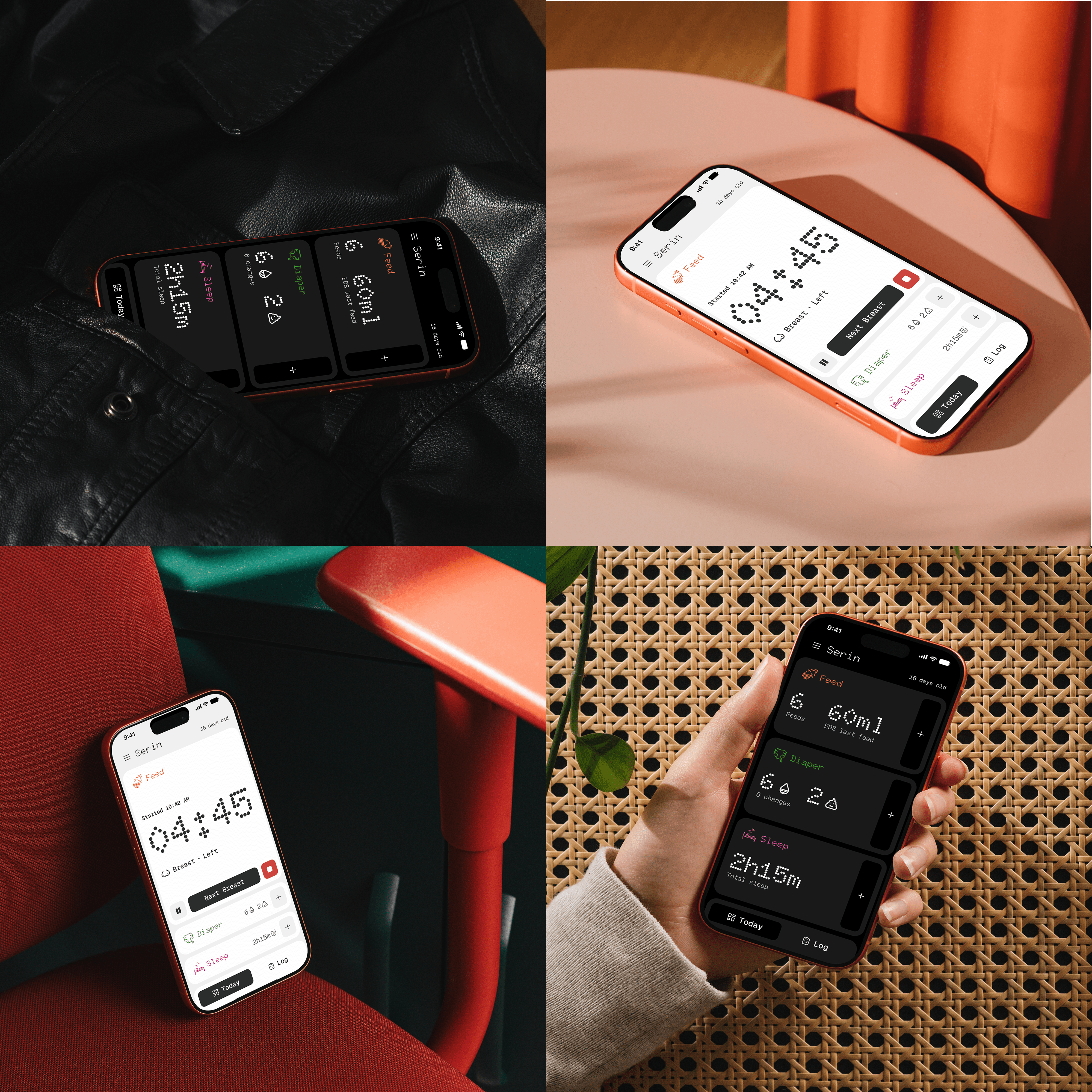
And I’m still building it.
I’ll share the next part once Kubai starts behaving like a real app rather than something Claude and I are trying to convince Xcode to run. :D